
Retaining Wall Installation in Chattanooga
New walls that hold back slopes, level out yards and stop soil from washing away. Free on-site estimates from local, licensed contractors across Chattanooga and North Georgia.
- Free on-site estimate
- Licensed & insured
- No obligation
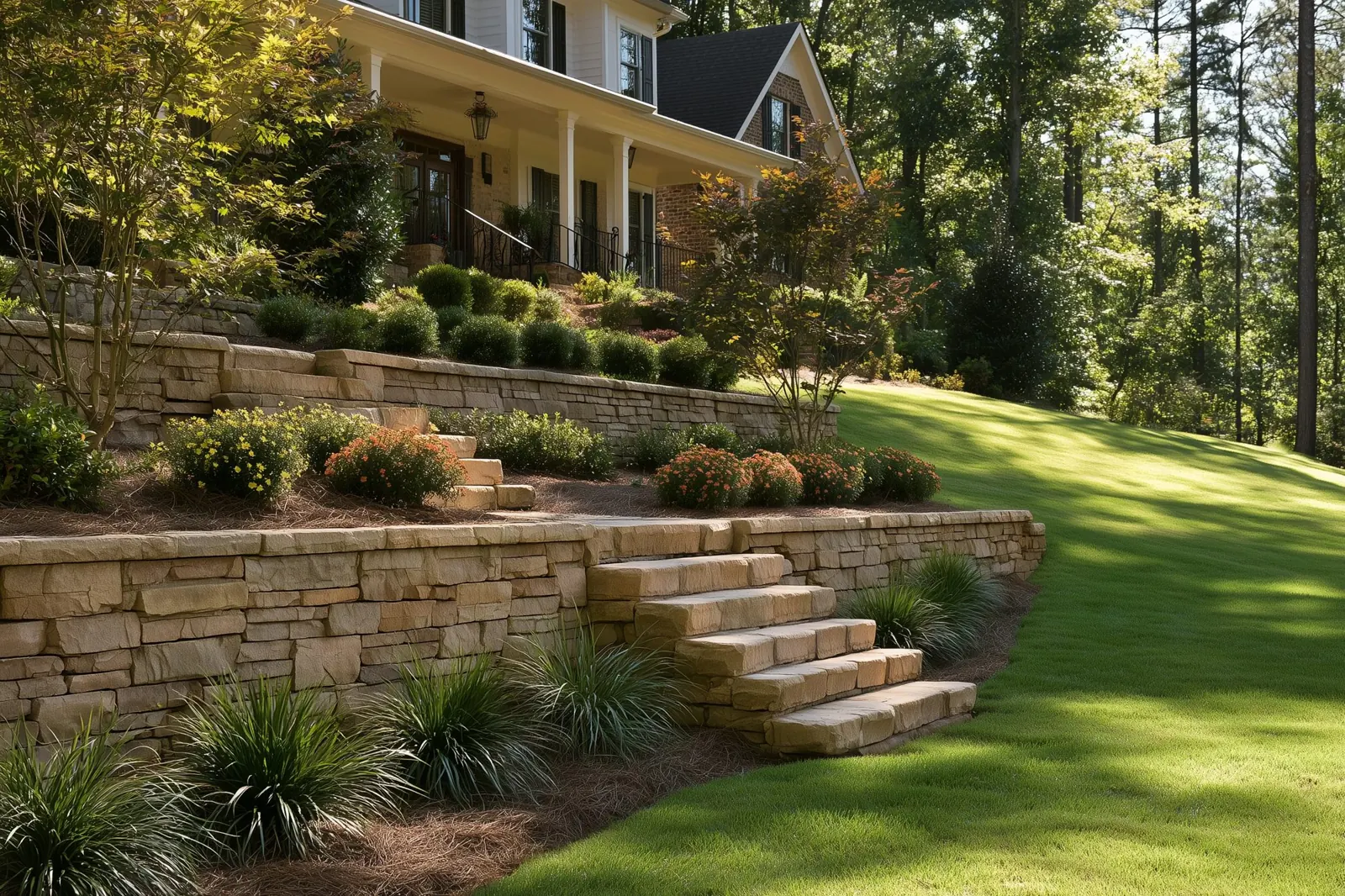
About retaining wall installation
A retaining wall holds soil in place where the ground changes height. It can turn a steep, unusable slope into a level yard, keep a hillside off your driveway, or stop erosion that is creeping toward your foundation.
Chattanooga is built on ridges and hillsides. Lots on Signal Mountain, Lookout Mountain, Missionary Ridge and the slopes around Hixson and Red Bank often need walls to make room for a patio, driveway, parking pad or play area. A well-built wall needs the right base, drainage and backfill, not just a neat-looking face.
When a retaining wall makes sense
- A slope in your yard is too steep to mow, use or plant
- Soil or mulch washes onto your driveway, patio or sidewalk after rain
- You want a flat area for a patio, lawn, garden or parking
- A hillside is eroding toward your house, garage or a neighbor’s property
- Your driveway or road cut needs a wall to hold the bank back
- You want raised beds or terraces on a sloped lot
The process
What the work usually includes
Site visit and layout
The contractor looks at the slope, soil, water flow and access, then recommends a wall type, height and location.
Excavation and base
The wall line is dug out and a compacted gravel base is laid so the wall sits level and does not settle.
Wall construction
Block, stone, boulders, concrete or timber are set course by course, with geogrid or deadmen added on taller walls to tie the wall into the hillside.
Drainage
A perforated drain pipe and clean gravel behind the wall let water escape so pressure does not build up and push the wall over.
Backfill and cleanup
Soil is backfilled and compacted in layers, the cap is set, and the site is graded and cleaned up.
How tall can a retaining wall be without an engineer?
In many local jurisdictions, walls taller than about 4 feet, or walls holding back a driveway, structure or steep slope, need an engineered design and a permit. Your contractor will check the rules for your address.
What is the best type of retaining wall?
It depends on height, look and budget. Segmental block is the most common for homes because it is strong and cost-effective. Natural stone and boulders suit landscaped and wooded lots, and poured concrete is used for tall or structural walls.
How long does it take to build a retaining wall?
Many residential walls take two to five days. Larger, taller or engineered walls, or jobs with tough access, can take longer.
Why do retaining walls fail?
Most failures come from poor drainage, a weak base, or a wall that was too tall for its design. Water trapped behind the wall builds pressure until the wall leans, bulges or collapses.
Related services
All services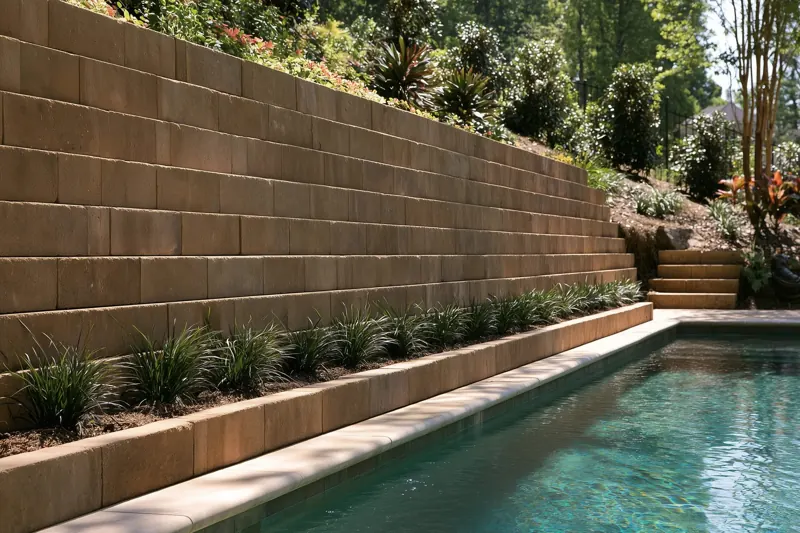 Block Retaining Walls Interlocking concrete block walls: strong, clean-looking and the most popular choice for homes. Learn more →
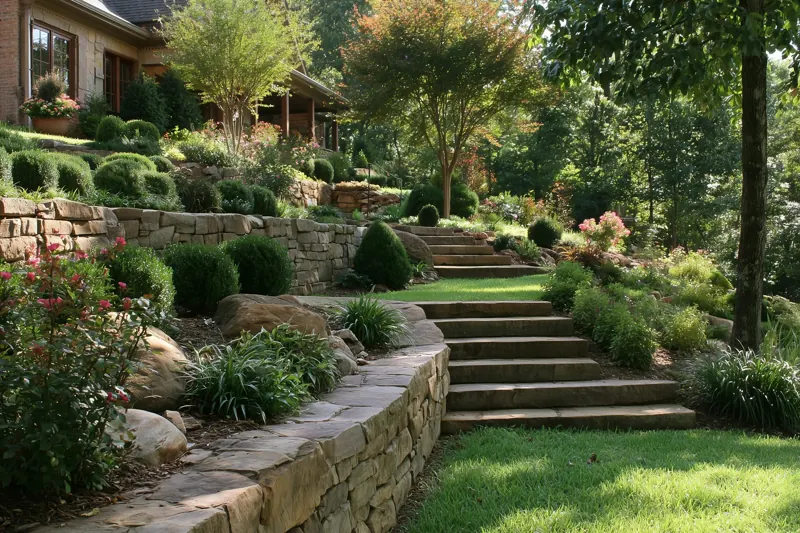 Natural Stone Retaining Walls Dry-stacked or mortared stone walls with a timeless, natural look. Learn more →
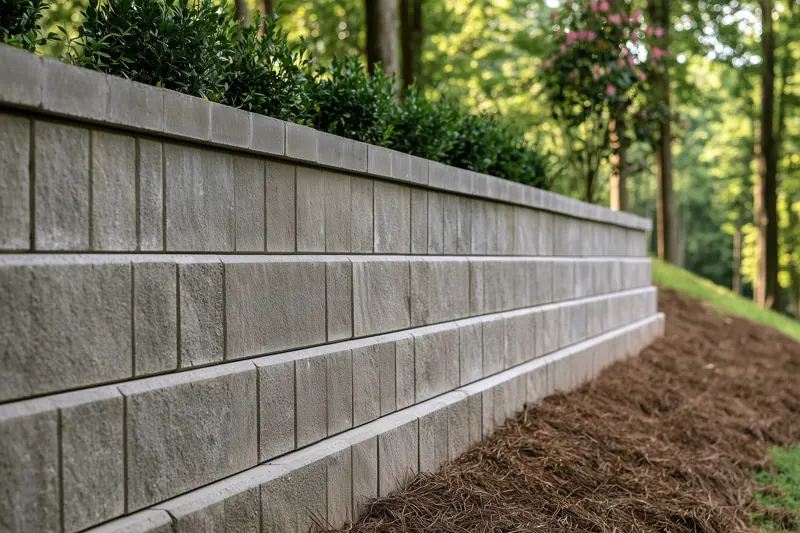 Retaining Wall Repair & Replacement Fix leaning, bulging, cracked or collapsing walls before they get worse. Learn more →
Retaining Wall Installation is available across the Chattanooga area, including: