
Hillside Terracing & Erosion Control in Chattanooga
Turn a steep slope into usable, level terraces and stop erosion for good. Free on-site estimates from local, licensed contractors across Chattanooga and North Georgia.
- Free on-site estimate
- Licensed & insured
- No obligation
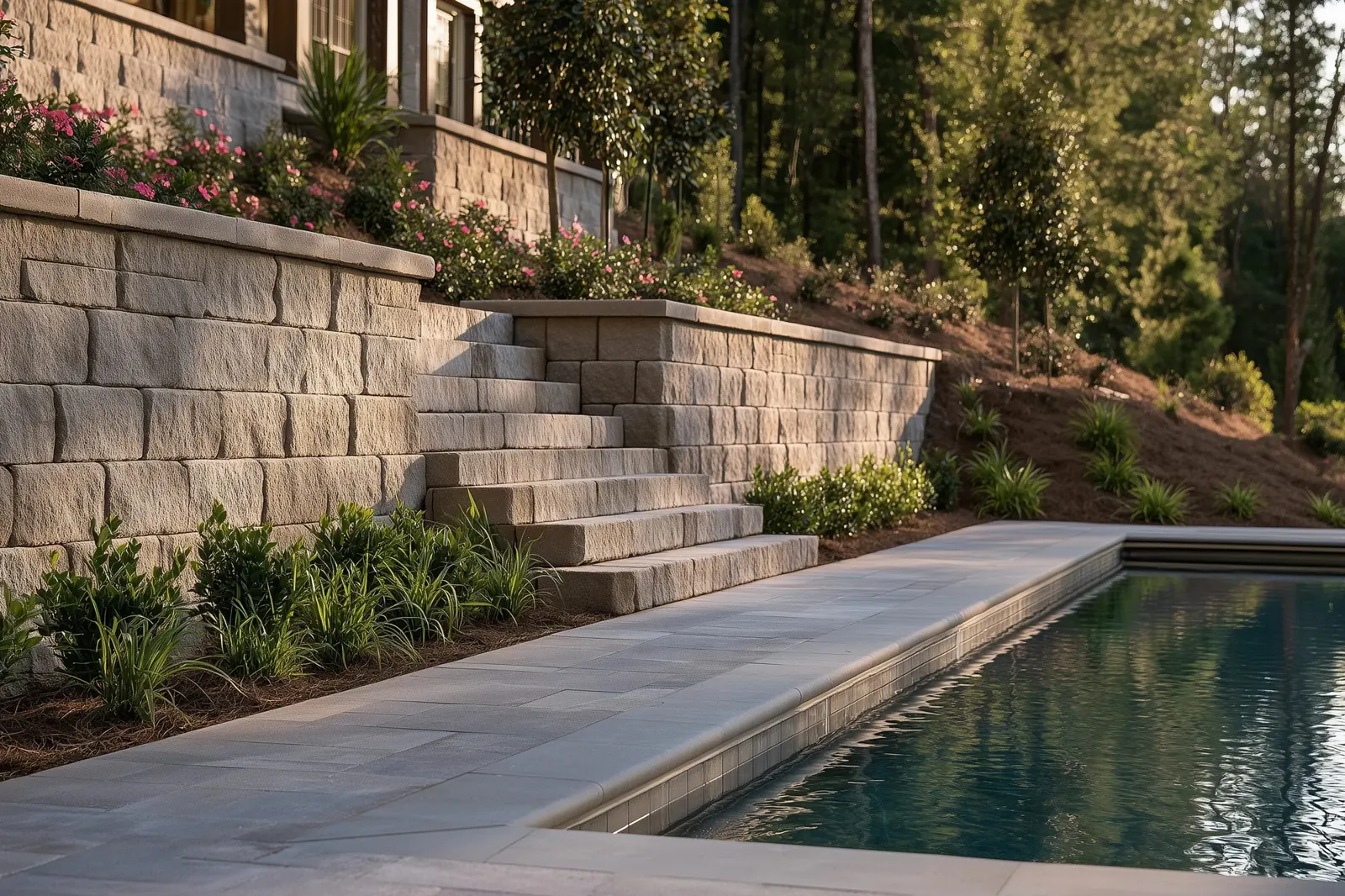
About hillside terracing & erosion control
Terracing breaks one steep slope into a series of shorter walls with level steps of ground between them. Shorter walls are often easier to build and permit than one tall wall, and the flat areas become usable space for lawn, gardens or seating.
On Chattanooga’s ridges, heavy rain can strip topsoil off a bare slope quickly. Terraces, drainage, and plantings work together to slow water down and keep the hillside where it belongs.
Signs you need it
- Gullies or ruts forming on a slope after storms
- Exposed tree roots or bare, washed-out soil
- Mud running onto driveways, patios or the street
- A steep backyard you cannot use
- Water pooling against your foundation at the bottom of a slope
The process
What the work usually includes
Slope and drainage plan
The contractor plans wall heights, spacing and where water will go.
Grading
The slope is cut and filled to create level terraces.
Terrace walls
Walls in block, stone or boulders hold each level.
Erosion control
Drains, erosion blanket, rock and plantings stabilize the remaining slope.
Is terracing better than one tall wall?
Often, yes. Several shorter walls spread the load, may avoid engineering requirements, and create usable flat areas. The terraces need enough space between walls to work.
How far apart should terrace walls be?
A common rule of thumb is to keep the space between walls at least twice the height of the lower wall, so the walls do not load each other. Your contractor or engineer will confirm.
Related services
All services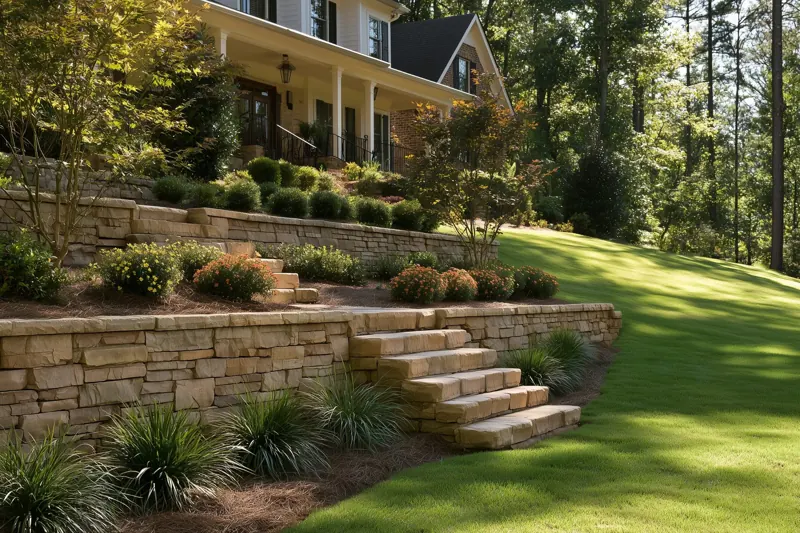 Retaining Wall Installation New walls that hold back slopes, level out yards and stop soil from washing away. Learn more →
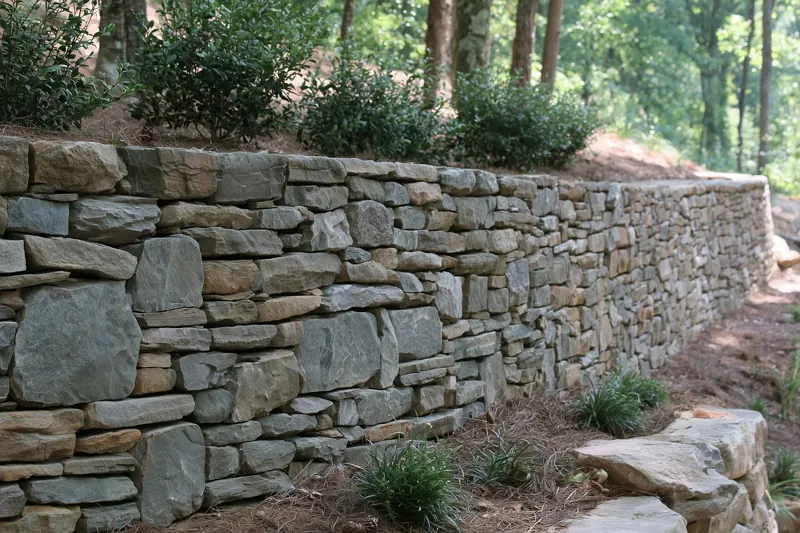 Boulder Retaining Walls Large boulders set with heavy equipment for a rugged, natural hillside wall. Learn more →
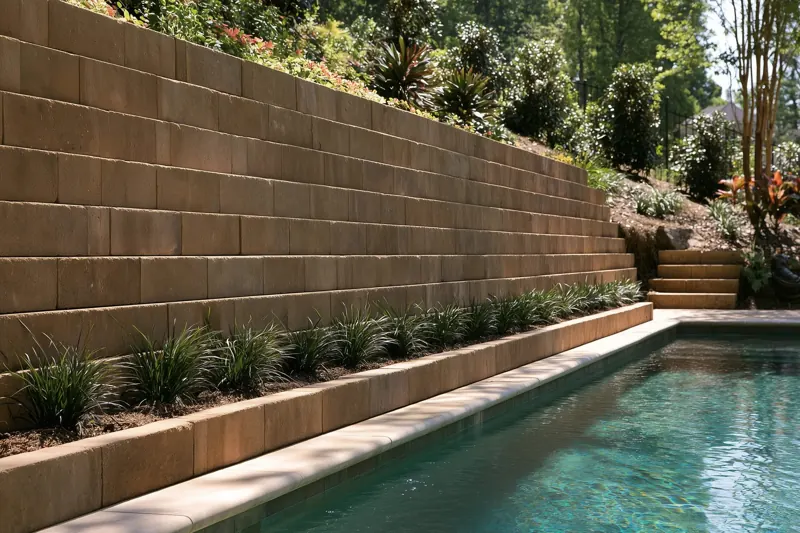 Block Retaining Walls Interlocking concrete block walls: strong, clean-looking and the most popular choice for homes. Learn more →
Hillside Terracing & Erosion Control is available across the Chattanooga area, including: